


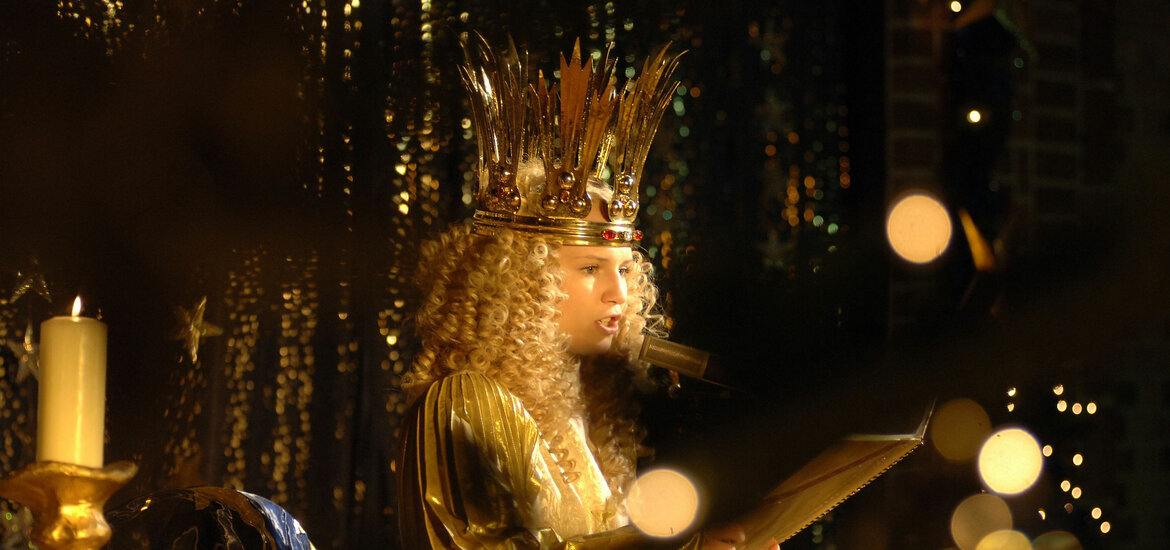
The Tradition of the Nuremberg Christkind Goes Back to the Reformation
The origin of the Christkind is often attributed to the protestant reformer Martin Luther. Rejecting the veneration of saints, he is said to have searched for a substitute for St. Nicholas, the traditional gift-bringer for children. To this day, we are not certain who invented an angel with blond curls as the personification of this character. Undisputed is one fact: Since the spread of the Reformation in Germany in the 16th century, the Christkind took over the role of the bringer of Christmas gifts for children – especially in protestant areas.
The Christkind was, of course, welcomed into the homes of the wealthy citizens of Nuremberg, as the Free Imperial City of Nuremberg turned protestant as early as 1525. The history of a living Christkind, who recites a prologue from the Church of Our Lady to open the market, actually began in the darkest time of German history –in 1933, at the command of a National Socialist city council.
Until 1968, the Nuremberg Christkind was played by actresses who wore a golden angel’s costume, a curly wig and crown. Between 1948 and 1960, the well-known local actress Sofie Keeser filled the role. She – just as Irene Brunner, who was Christkind from 1961 to 1968 – was a member of the ensemble of the Nuremberg City Theatre.
Since 1968, the citizens of Nuremberg and a jury choose a young woman from Nuremberg to serve in this important office for two years. Luckily, the tradition of the Nuremberg Christkind was not tainted by the era in which it was misused as a political figure. To make that clear, today her prologue includes a sentence that illustrates that Nuremberg is a modern and cosmopolitan city.