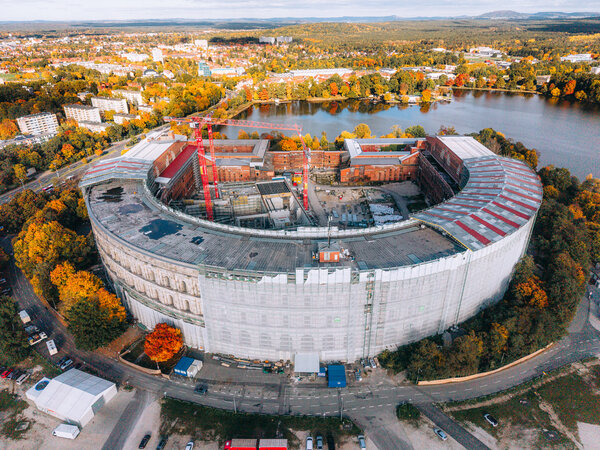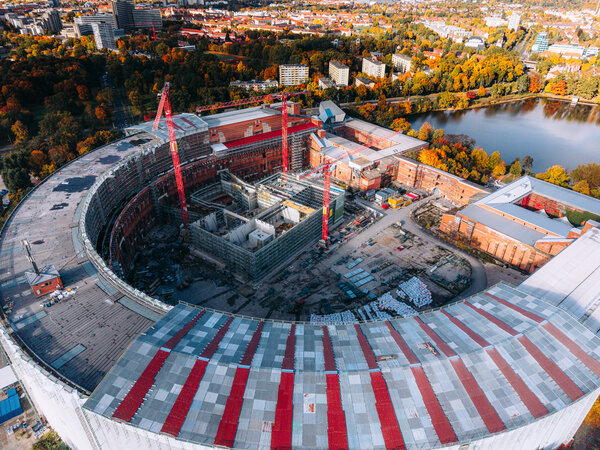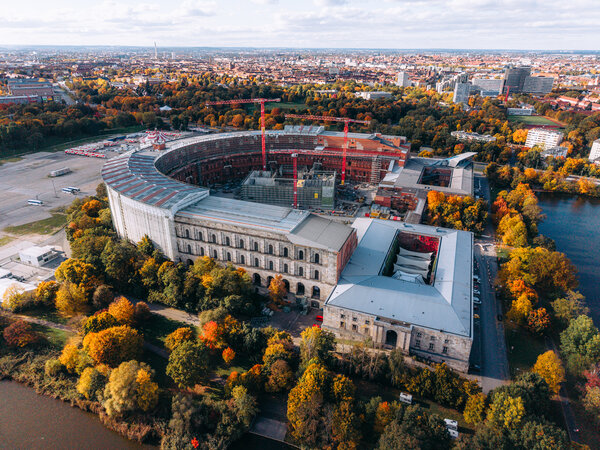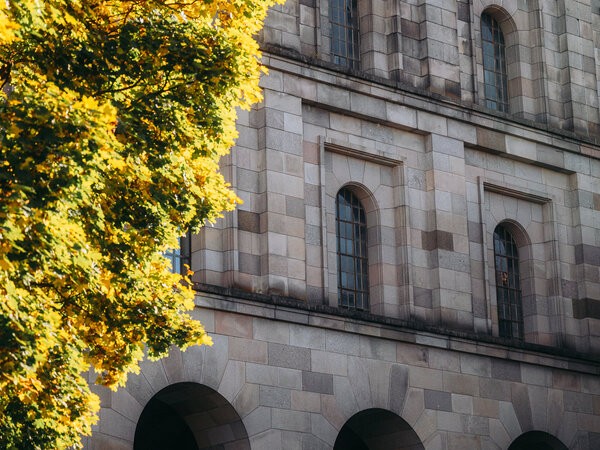


The Congress Hall was to be a central component of the National Socialists' construction programme in Nuremberg. Designed by Nuremberg architect Ludwig Ruff, the building is typical of the monumental architecture of the Third Reich: the façade is inspired by the Colosseum. The foundation stone for the building was laid in 1935. If the Congress Hall had been completed, it would have reached a height of 70 metres. Due to the war, construction was halted in 1939. The interior of the hall, the inner courtyard, the upper floors and the entire interior decoration remained unfinished. Only the exterior façade of solid granite was given its final form. After the Second World War, the building was used for various purposes. In 1963, the Nuremberg Symphony Orchestra moved into the south wing, and in 2001, the Documentation Centre moved into the north wing.
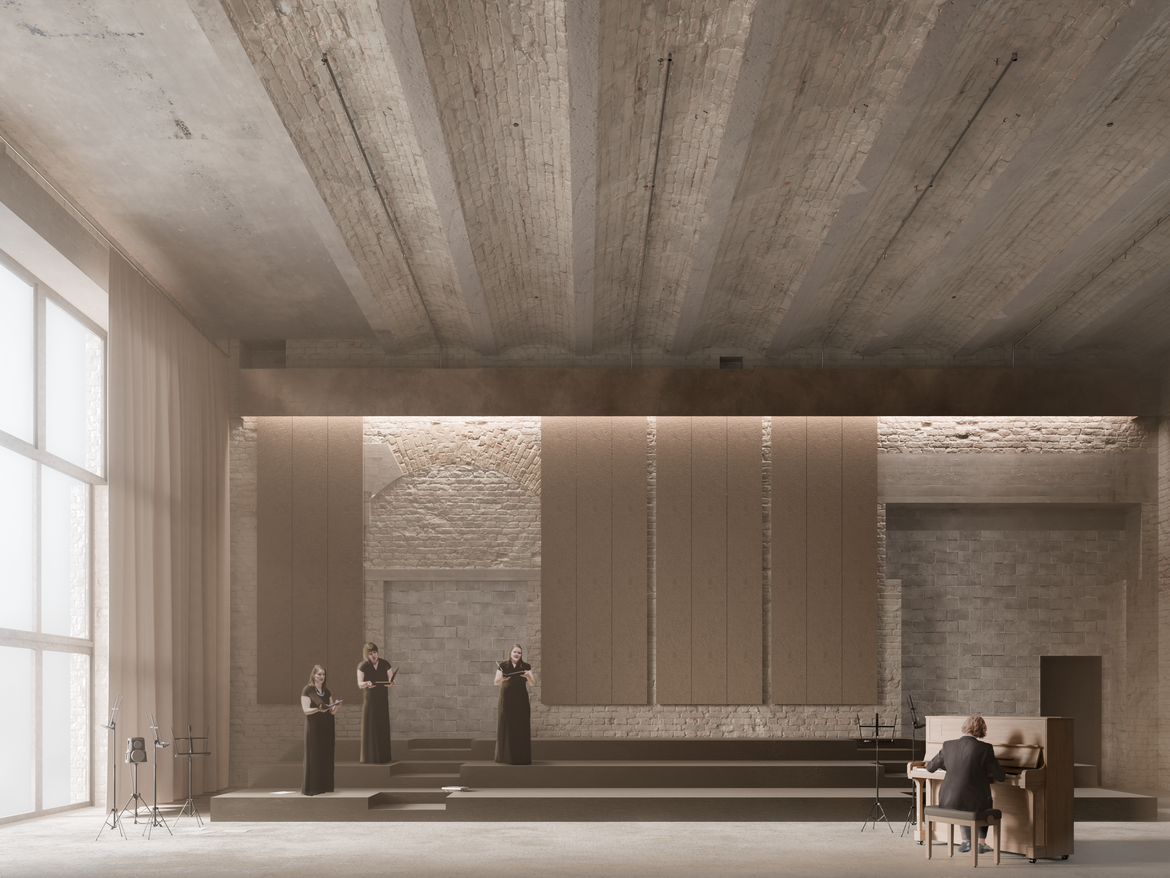
The Congress Hall will be transformed into a cultural centre in the coming years. Creative spaces for artists of all genres will be created, as well as rehearsal and presentation rooms. The heart of the new cultural centre will be the new venue for the Nuremberg State Theatre in the inner courtyard of the Congress Hall. The Nuremberg State Theater, Bavaria’s largest multi-disciplinary venue for opera, drama, ballet, and concerts, attracts approximately 300,000 visitors per season through some 700 performances. With over 650 employees, the theater is committed to artistic diversity and excellence, as well as a special connection with its audience. Together with the Schauspielhaus, the opera house on Richard-Wagner-Platz, which opened in 1905, is a cultural landmark whose influence extends far beyond Nuremberg. After more than 120 years, however, the building exhibits significant structural and technical deficiencies. For the planned renovation and expansion, the music theater—which includes opera, ballet, and concert divisions—will therefore move to a new venue in the Congress Hall on the former Nazi Party Rally Grounds in 2028.

The new theater building is being constructed in the inner courtyard of the Congress Hall and will feature a main stage, an orchestra pit, an orchestra rehearsal room, and an auditorium seating 800 people. Audiences always enter the new building through the historic rotunda, allowing them to experience and engage with the historic site with every visit. The Congress Hall rotunda also houses central public areas such as the entrance hall, box office, foyer spaces, and dining facilities. The administration offices, workshops, and other departments of the State Theater are also located in the existing building. With the new venue, the Congress Hall will become a “third place”—a vibrant, open cultural space: a “third place” where people can meet, exchange ideas, discuss issues, and experience art firsthand. As a platform for democratic discourse and social participation, the State Theater will become an active, diverse gathering place.
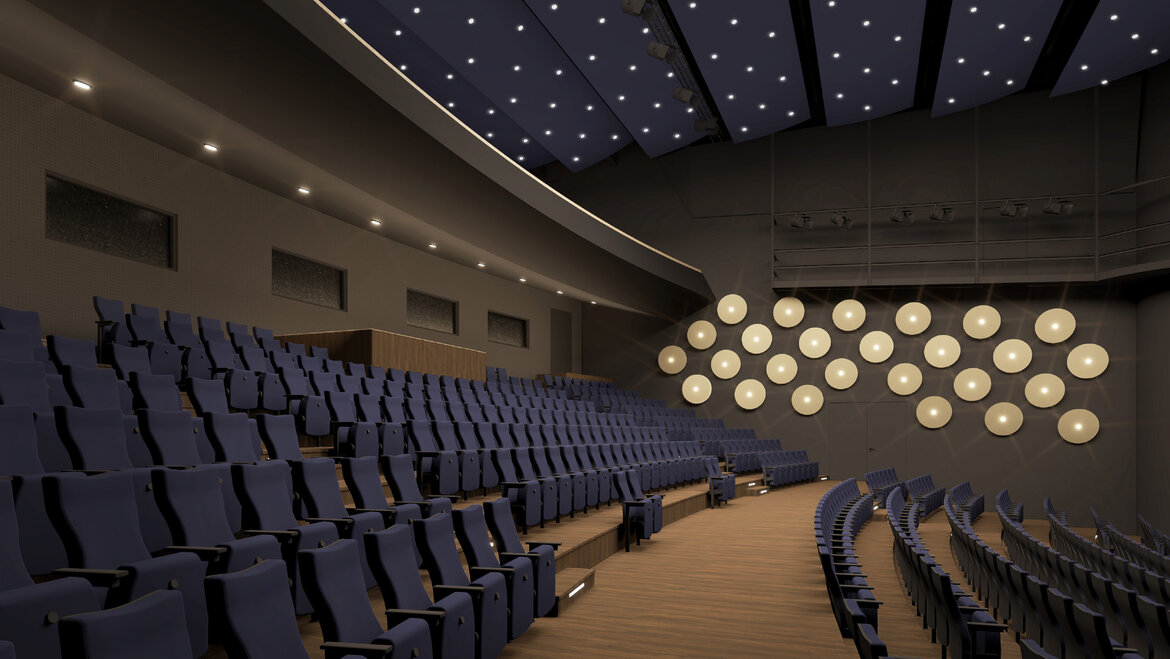
Construction on the new building in the inner courtyard began in December 2024. Construction is scheduled for completion in the fourth quarter of 2027, with the opening planned for the fourth quarter of 2028, in time for the 2028–29 season. The Free State of Bavaria is providing 75 percent of the funding for the new venue. State Intendant and Opera Director Jens-Daniel Herzog emphasizes that the State Theater—particularly in the Congress Hall—will consciously engage with the historical significance of the site, but will not remain stuck in a mere process of coming to terms with the past. Instead, the artwork is intended to serve as a vibrant, and at times humorous, counterpoint to Nazi ideology—a “permanent anti-Reich Party Congress” that demonstrates that art and humanity are stronger than the Nazis’ inhuman ideology.
The “Creative Spaces” and the venue for musical theater and dance are set to create a place for encounters and creative exchange in collaboration with the Documentation Center Nazi Party Rally Grounds and the Nuremberg Symphony Orchestra. A diverse program of events will welcome audiences to the Congress Hall during the 2028–29 season.