


‘Memory needs places – and responsibility does not end with time.’ – Dr Markus Söder – Minister-President of the Free State of Bavaria
How does a society deal with its past, especially with the dark chapters of its history? This question is at the heart of the culture of remembrance. For the city of Nuremberg, it is an essential part of its self-image.
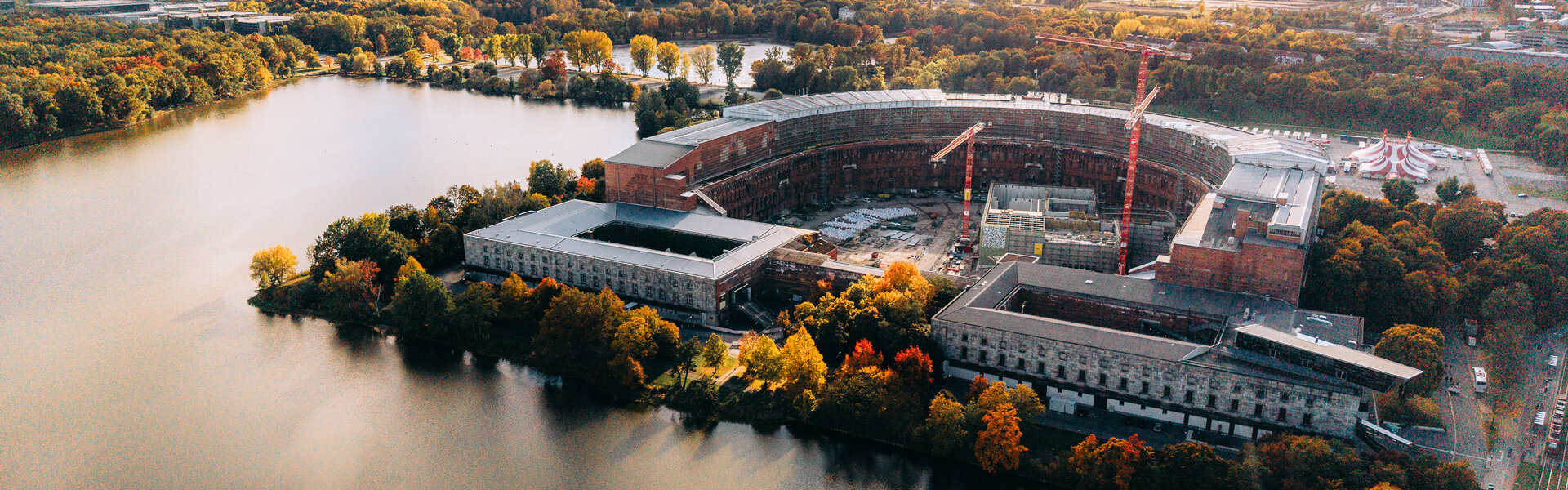
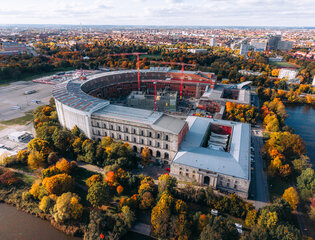
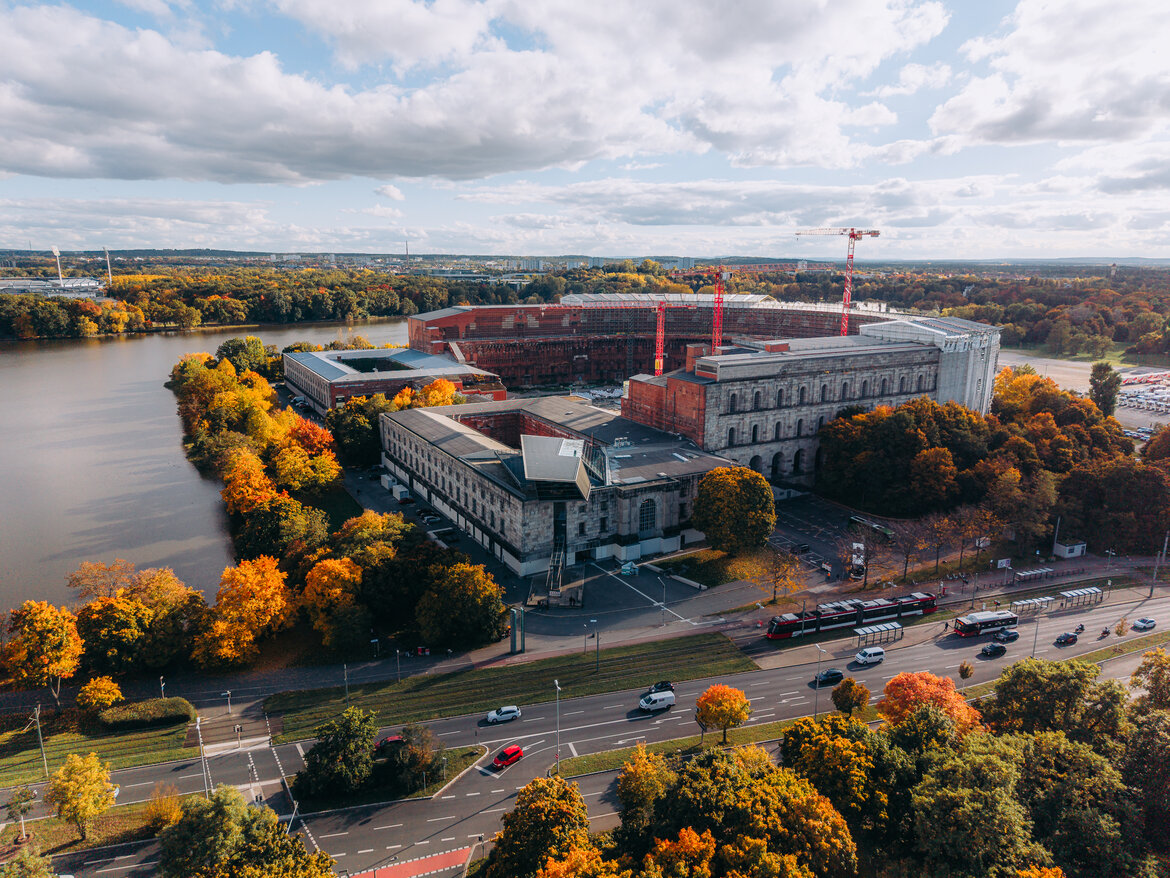
After the National Socialist Party held its party conferences in Nuremberg in 1927 and 1929, Nuremberg became the ‘city of the Reich Party Congresses’ from 1933 onwards. Evidence of this darkest chapter in the city's history can be seen in the monumental buildings on the Dutzendteich site in south-east Nuremberg, some of which are still standing today.
For a long time, Nuremberg's approach to the architectural relics of National Socialism was characterised by pragmatism – much was removed, while other parts were left to decay. Today, Nuremberg sees itself as a ‘city of peace and human rights’ and is taking a new approach to the use of the former Nazi party rally grounds. At the forefront of this is the renovation of the Documentation Centre, which has been located in the northern wing of the Congress Hall since 2001 and is dedicated to documenting the history of National Socialism and the Nazi party rallies in Nuremberg. The Documentation Centre has been undergoing renovation since 2021. In a separate exhibition hall, the interim exhibition ‘Nuremberg – Site of the Reich Party Rallies: Staging, Experience and Violence’ currently offers a compact overview of everything worth knowing about the site. The newly designed permanent exhibition will be on display from 2026.
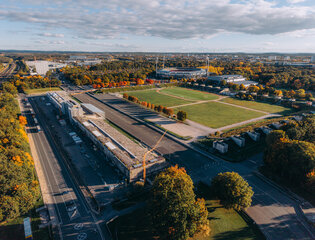
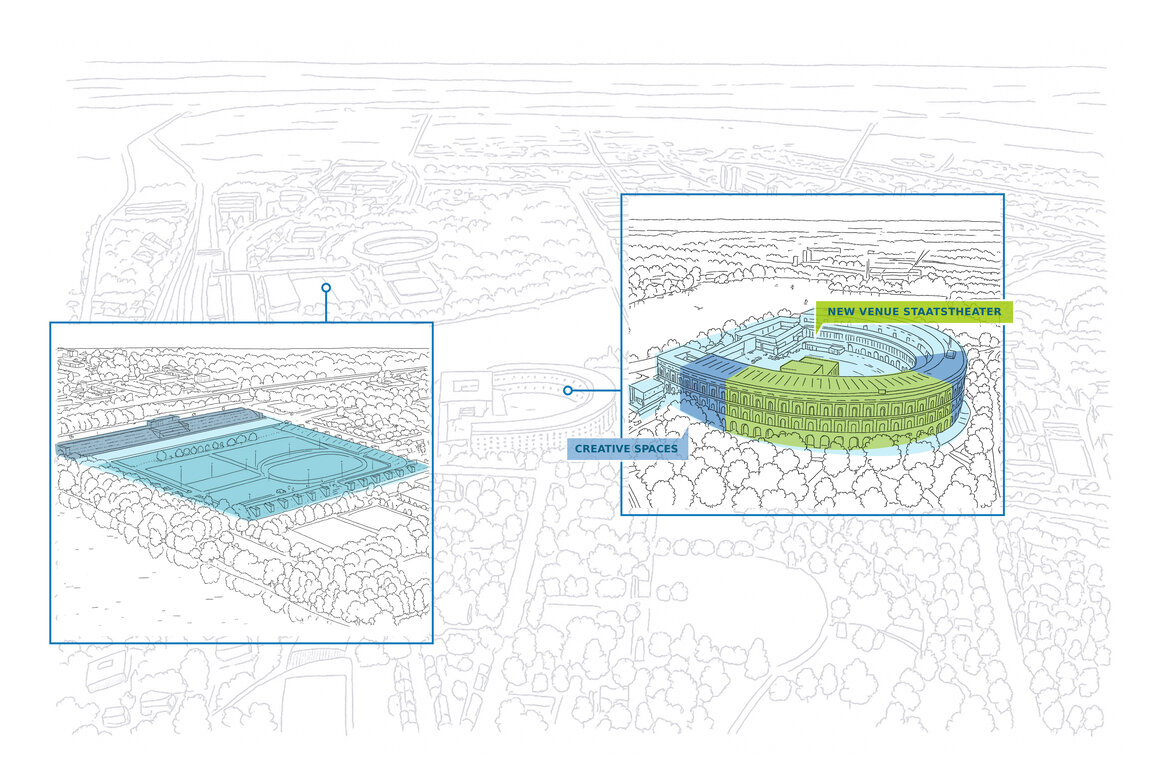
In the coming years, other parts of the Congress Hall will also be converted into a cultural area: new spaces for artists and a new venue for the Nuremberg State Theatre with an extension in the inner courtyard will, together with the Documentation Centre Nazi Party Rally Grounds and the Nuremberg Symphony Orchestra, create a place for encounters and creative exchange. A diverse programme of events will invite the public to visit the Congress Hall from the 2028/29 season onwards. The Zeppelin Field and the Zeppelin Grandstand of the former Nazi Party Rally Grounds will also be opened to the public and developed into a place of learning and encounter by 2030. The Dutzendteich railway station will be converted into an information centre by 2027, and the Märzfeld railway station will be transformed into a dignified memorial site that can be visited in the coming years.
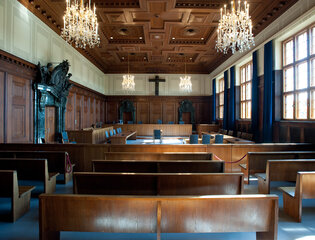
Culture of Remembrance Information material
Culture of Remembrance Images
Our media library contains numerous photos on the subject of the culture of remembrance. The images are available free of charge for reporting purposes – commercial use is not permitted.
Culture of Remembrance Video
The video may only be used for journalistic purposes to report on Nuremberg and may not be passed on to third parties. Commercial use is not permitted.




Detailed content and historical questions
We are happy to assist you with any further questions regarding content or history. Please contact our PR and Communications Team. Upon request, we will put you in touch with the relevant contact persons and institutions.
Subscribe to our press newsletter
Stay up to date with our press newsletter. Don't miss out on any news about our campaigns, events, and tourism development in Nuremberg.