Hotline: +49 911 / 2336-0
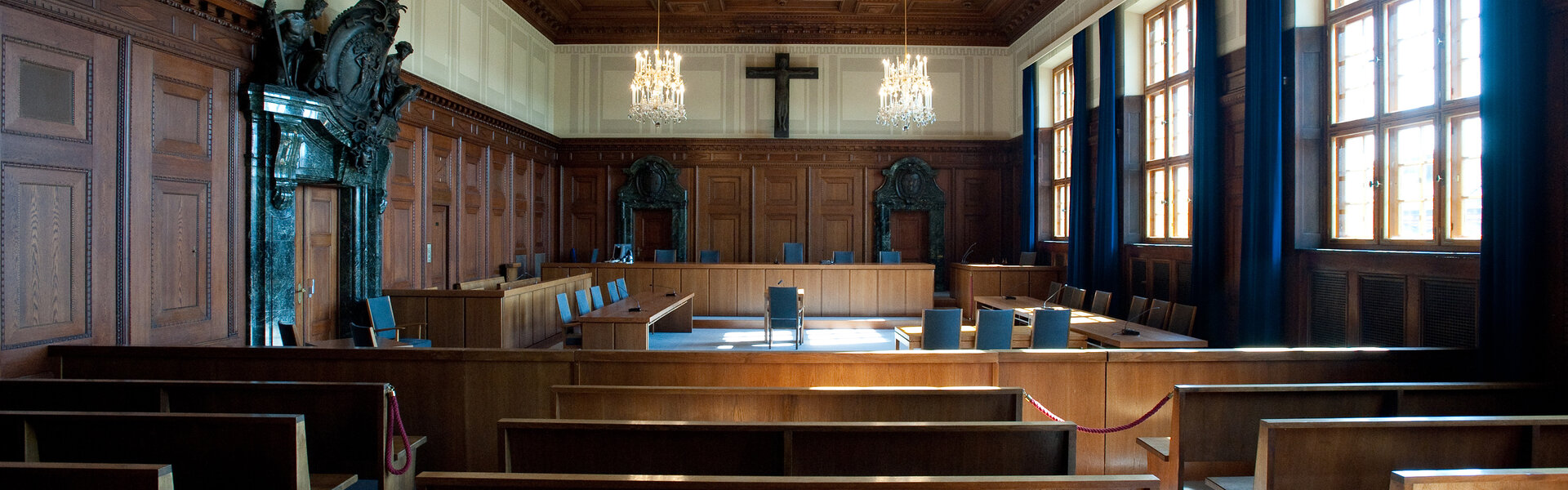
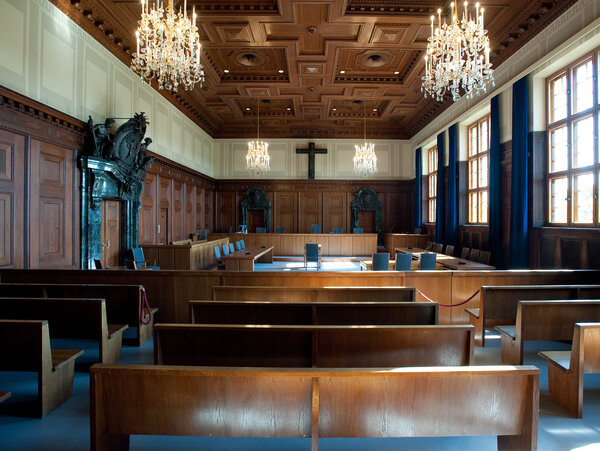
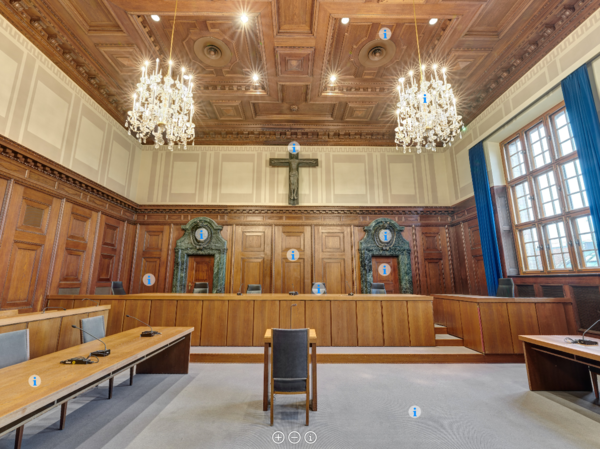
Blick in den historischen Saal 600 des Memoriums Nürnberger Prozesse mit Holzvertäfelung, Kronleuchtern und Holzbänken.

Memorium Nuremberg Trials

© Christine Dierenbach

In international perception, Nuremberg is closely linked to the Nuremberg Trials. In front of the International Military Tribunal, founded by the four Allied Powers of World War II, 21 men were tried from November 1945 to October 1946 for crimes against peace, war crimes and crimes against humanity. After this Nuremberg Trial against the leading Nazi war criminals, twelve subsequent trials followed in front of a US military tribunal until April 1949. These trials are considered to be the most important component of the Allied Powers’ program to punish the leading representatives of the National Socialist regime.

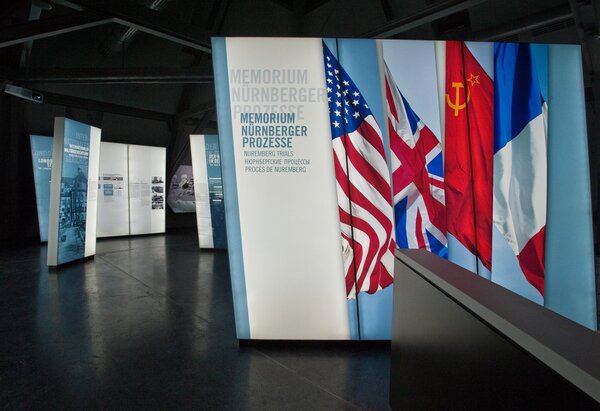
The Memorium Nuremberg Trials informs visitors today at this historic location about the trial of major Nazi war criminals in Courtroom 600 and about the 12 additional trials of the Nuremberg Military Tribunals. In addition, it shows the impact of the Nuremberg Trials on the development of international criminal law. In Cube 600, it prepares special and traveling exhibits about these topics.

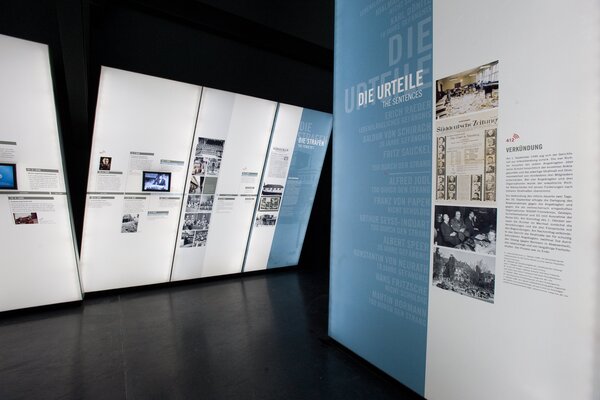
More than 60 years after the trials a permanent exhibition has been opened at the original site to provide relevant information on the background, proceedings and consequences: Explanations are given on the role of the defendants in the National Socialist power structure and the crimes they were accused of. Historic sound and film footage convey a vivid impression of the trials. The significance of the trials for the development of modern international criminal law made "Courtroom 600" world famous.

The "Nuremberg Principles" ensuing from the International Military Tribunal today form the basis for the International Criminal Court in The Hague. They illustrate how attitudes have changed since 1945/46 towards those responsible for the fortunes of the world’s nations and peoples.

Courtroom 600: Time Travel

Since 2022, visitors have been able to embark on a journey through time in Courtroom 600. The media installation ‘Zeitreise Saal 600 | Courtroom 600: Time Travel’ transports visitors back almost 80 years to the historic period of the Nuremberg Trials and allows them to experience Courtroom 600 in a new way.


At a glance

Information

Memorium Nuremberg Trials
Bärenschanzstraße 72
90429 Nürnberg
+49 (0)911 231 28614
+49 (0)911 23128615
memorium@stadt.nuernberg.de
Webseite

Opening hours

Mon & Wed - Fri: 9 am - 6 pm

Sat & Sun: 10 am - 6 pm

Tue: closed

The Courtroom 600 cannot be visited from July 23 to 26, 2025.

Closing times Courtroom 600

Prices

Adults 7,50 € / reduced rate 2,50 € /

School classes 2 € /
Groups of 15 and more 7,- € /
Families 8 € 

For an extra 3,-  €, you may also visit all other municipal museums free of charge on the same day.

Free entrance with the NÜRNBERG CARD


Guided Tours

Sat: once a month at at 2pm (tour in English)
Saturday, 16.07.2022
Saturday, 06.08.2022
Saturday, 20.08.2022
Saturday, 03.09.2022

Price: 3 ,- € / reduced rate 2,- €  in addition to admission fee

Groups only by appointment:
Tel.: +49 (0)911 231 - 28 614 or memorium@stadt.nuernberg.de
Price: 60,- € (German) / 80,- € (foreign languages) in addition to admission fee

More information on the guided tours

Information about the educational services at the Memorium Nuremberg Trials

Basic information on accessibility

Fully wheelchair accessible

Wheelchair accessible toilet

Videoguide for deaf people

All information on disabled access

Memorium Nuremberg Trials

Memorium Nuremberg Trials:

5 things, you should know about.
  1. The Nuremberg trial against the major war criminals of the Nazi regime sat in Courtroom 600 for 218 sessions over the course of almost a year.
  2. During the Nuremberg Trial, the four allied powers provided both the judges (Head of the Court: Great Britain) and the prosecution staff.
  3. The testimony of the survivors of the Holocaust during the Nuremberg Trials conveyed the unimaginable dimensions and horror of the criminal politics of the Third Reich.
  4. On December 11, 1946, the General Assembly of the United Nations issued the Nuremberg Principles, a resolution that recognized "the principles of international law recognized in the Charter of the Nuremberg Tribunal and in the judgment of the Tribunal."
  5. The serious game “Tribunal 45. Working on Justice” is a free digital educational game that complements the permanent exhibition.
Share it via